
Mudd 72V
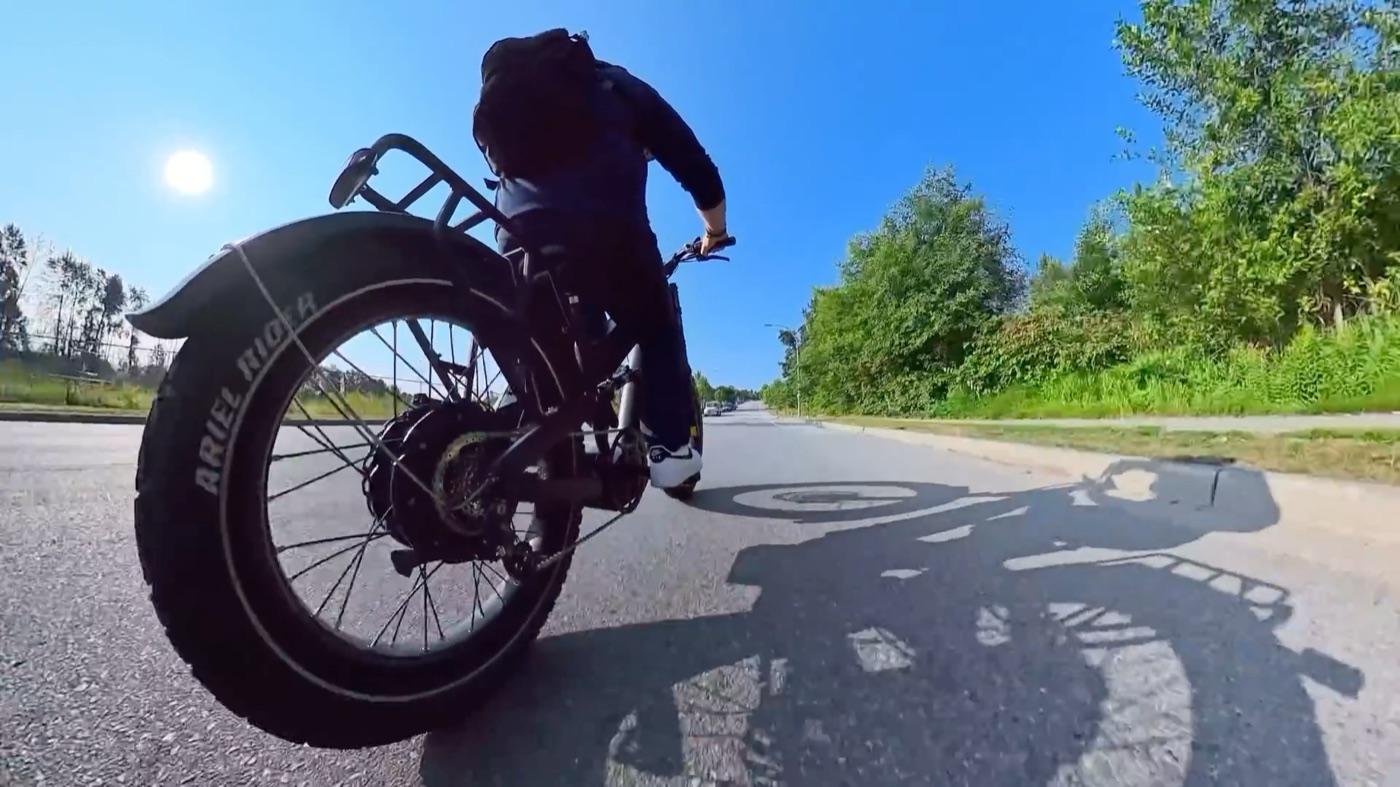
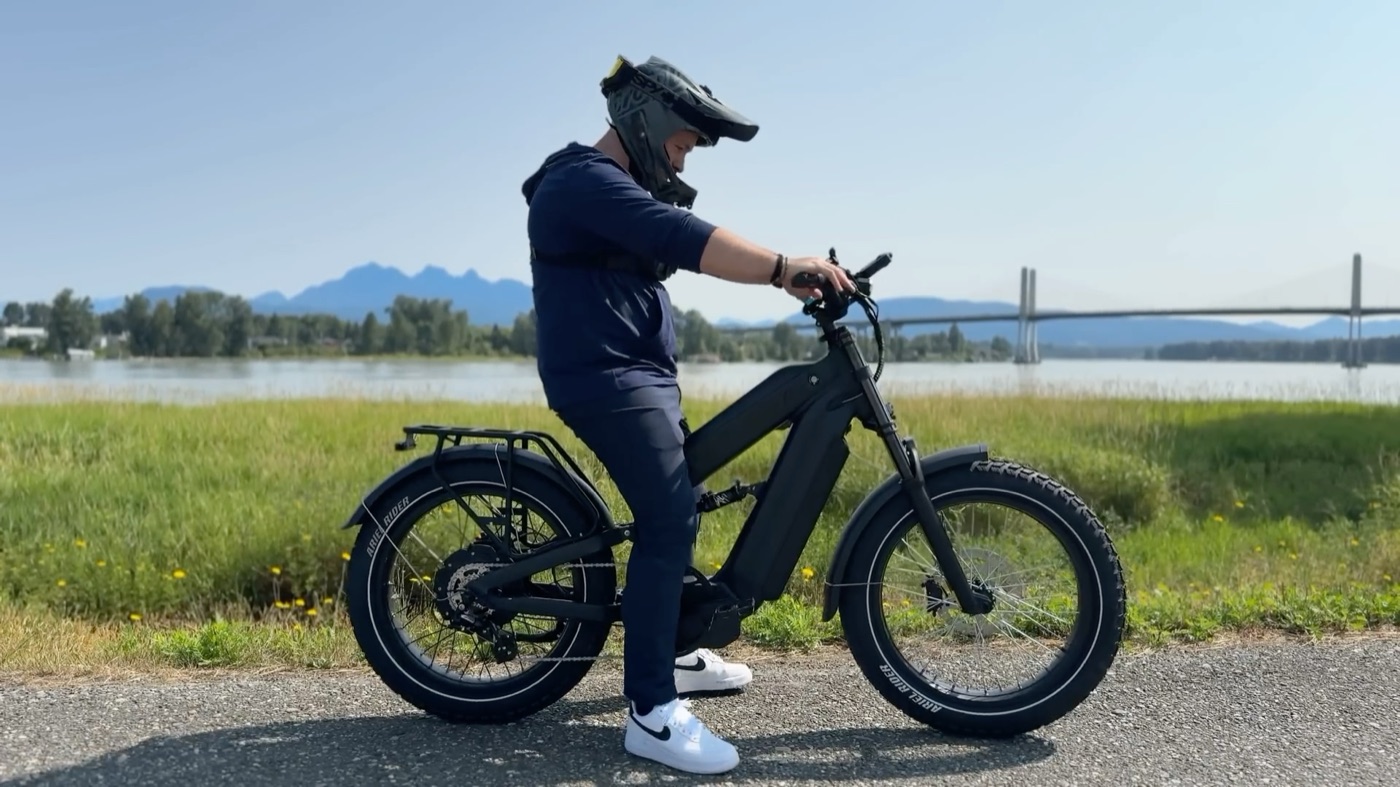
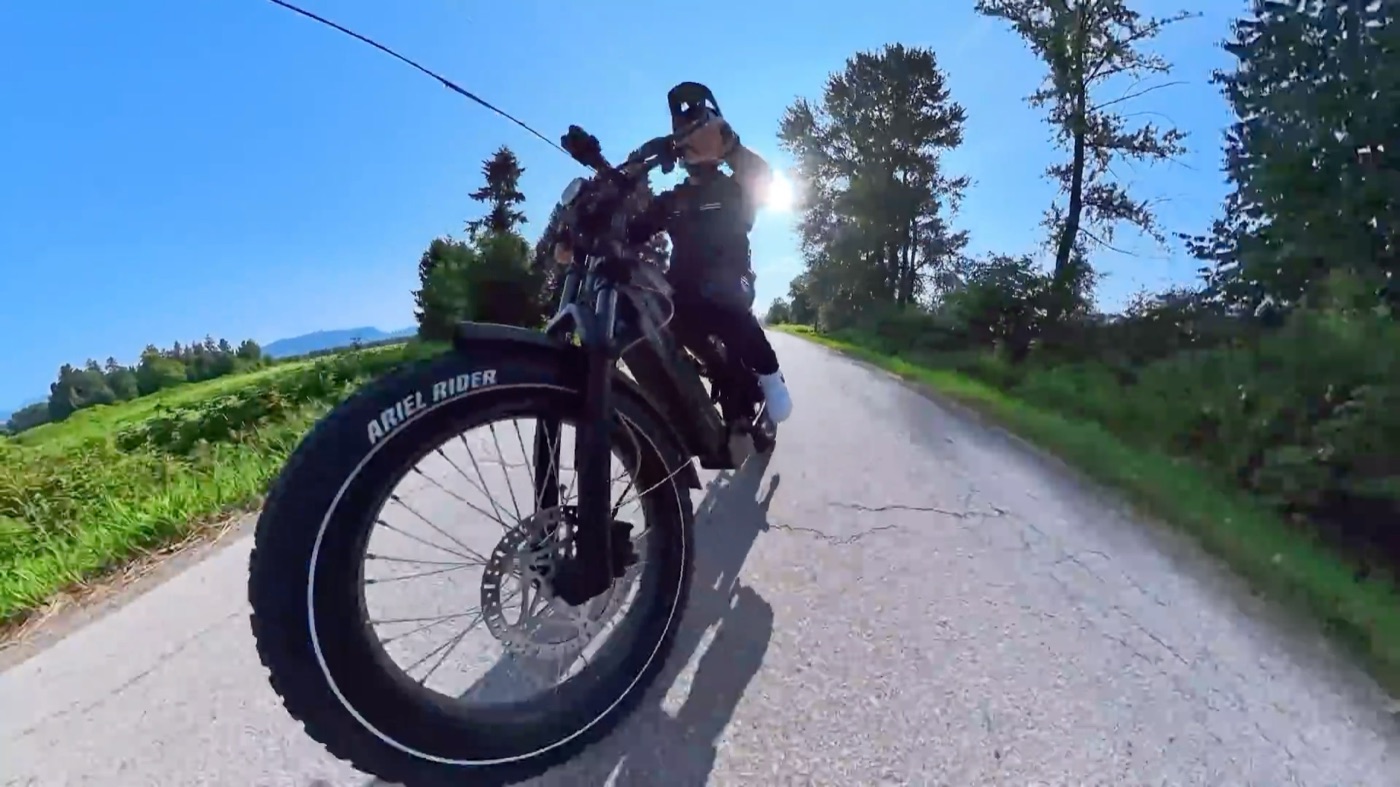
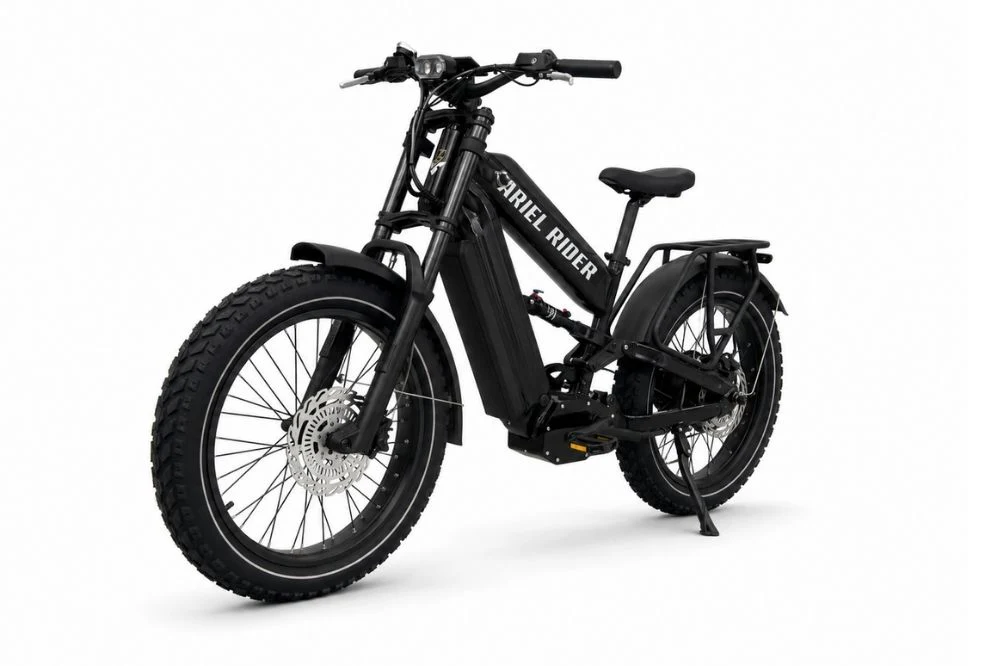
Ariel Rider may have just built the craziest bike I've ever had in the Cave. 8,000 watts peak, 330 Nm, a 72V 39Ah dual battery — and it still has pedals. I ran it through the whole gauntlet and put 58 mph on the GPS.
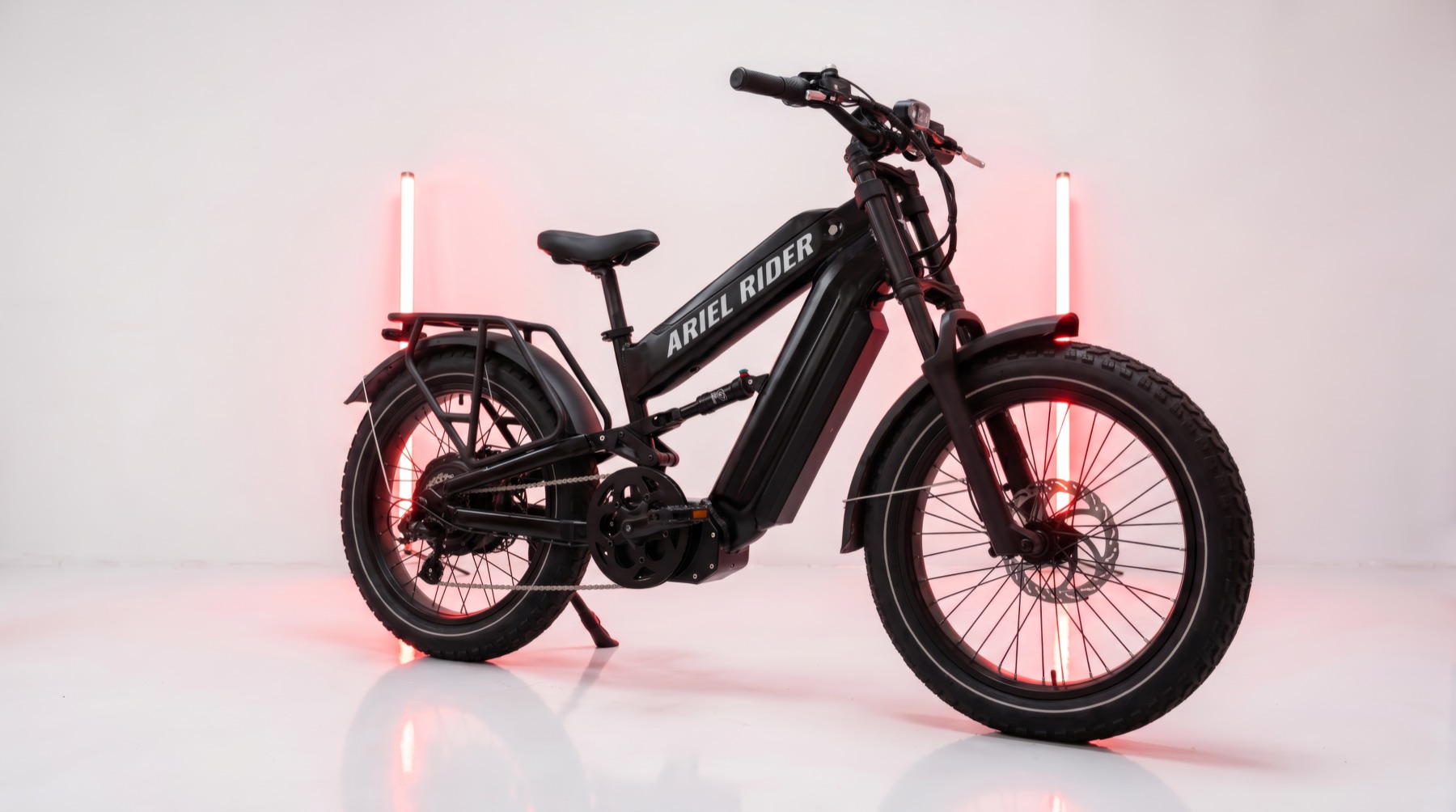
The bike I rode is Ariel Rider's last prototype — about 99% of what you'll get. Four things change on the production model: a bigger 29Ah downtube battery (mine was 25Ah), adjustable motorcycle brake levers, a rear light with a license plate holder, and a rear rack with real mounting hardware for a hard basket. Every number on this page was measured on the smaller prototype battery, so your range should be better than mine.
Watch the Review
Full Video Review
Watch on YouTube →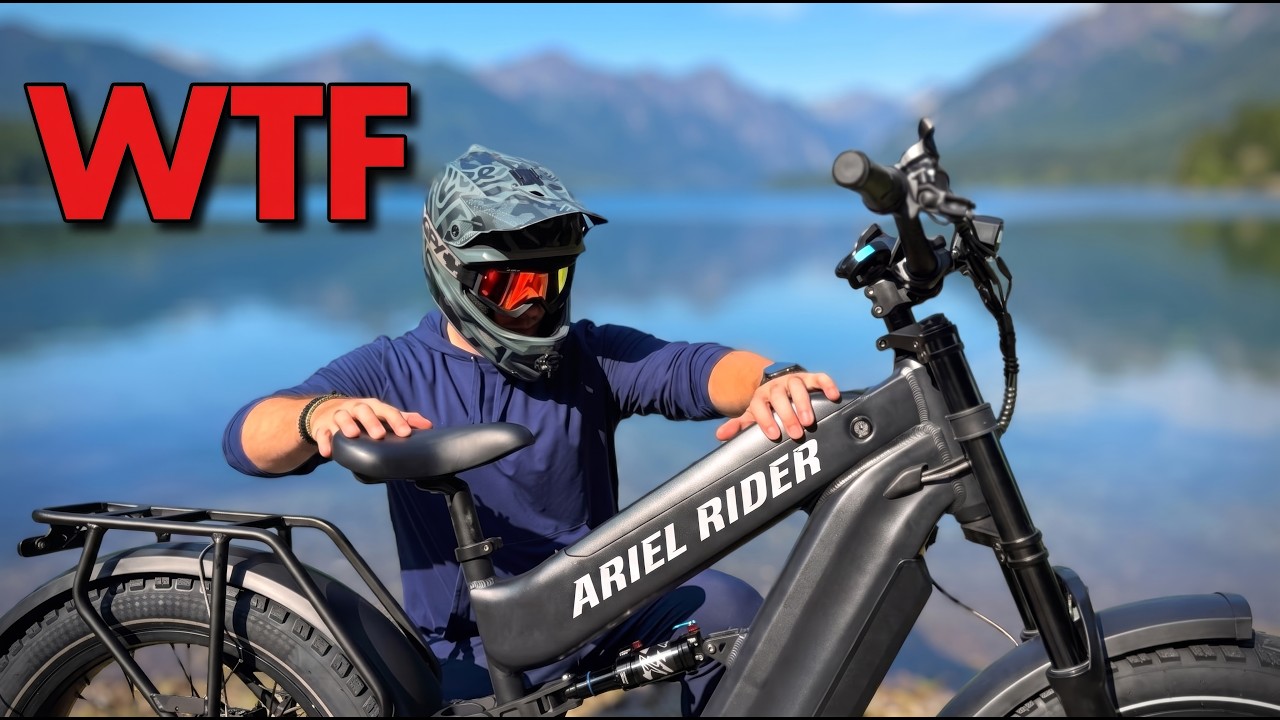
The Gauntlet
What I Actually Measured
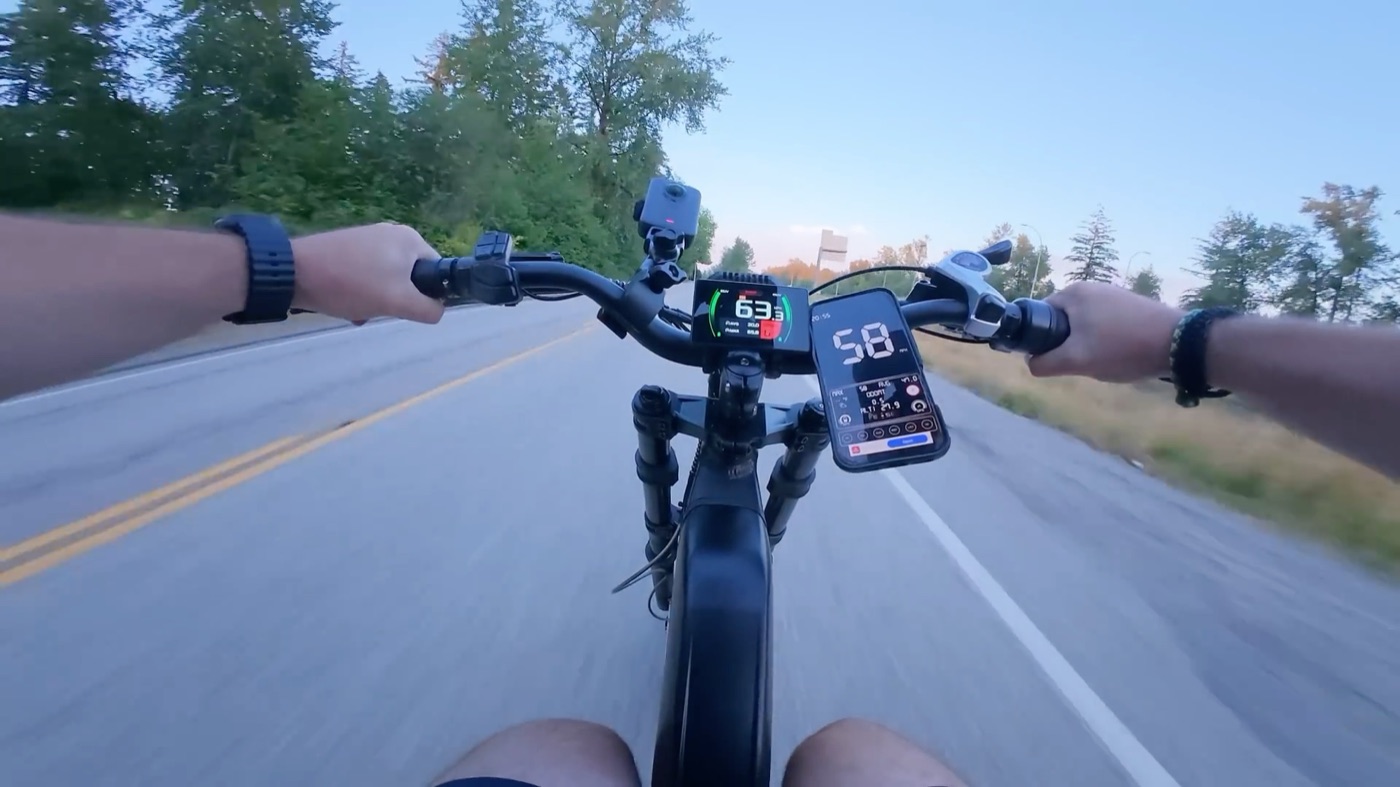
See every test in the video →Ariel Rider claims 65. On Test Drive Island, in ludicrous mode with throttle power 3 and PAS 6, I got 58 on the GPS — the bike's own display was reading 63.3. At that speed it still felt stable and planted. I felt completely at home.
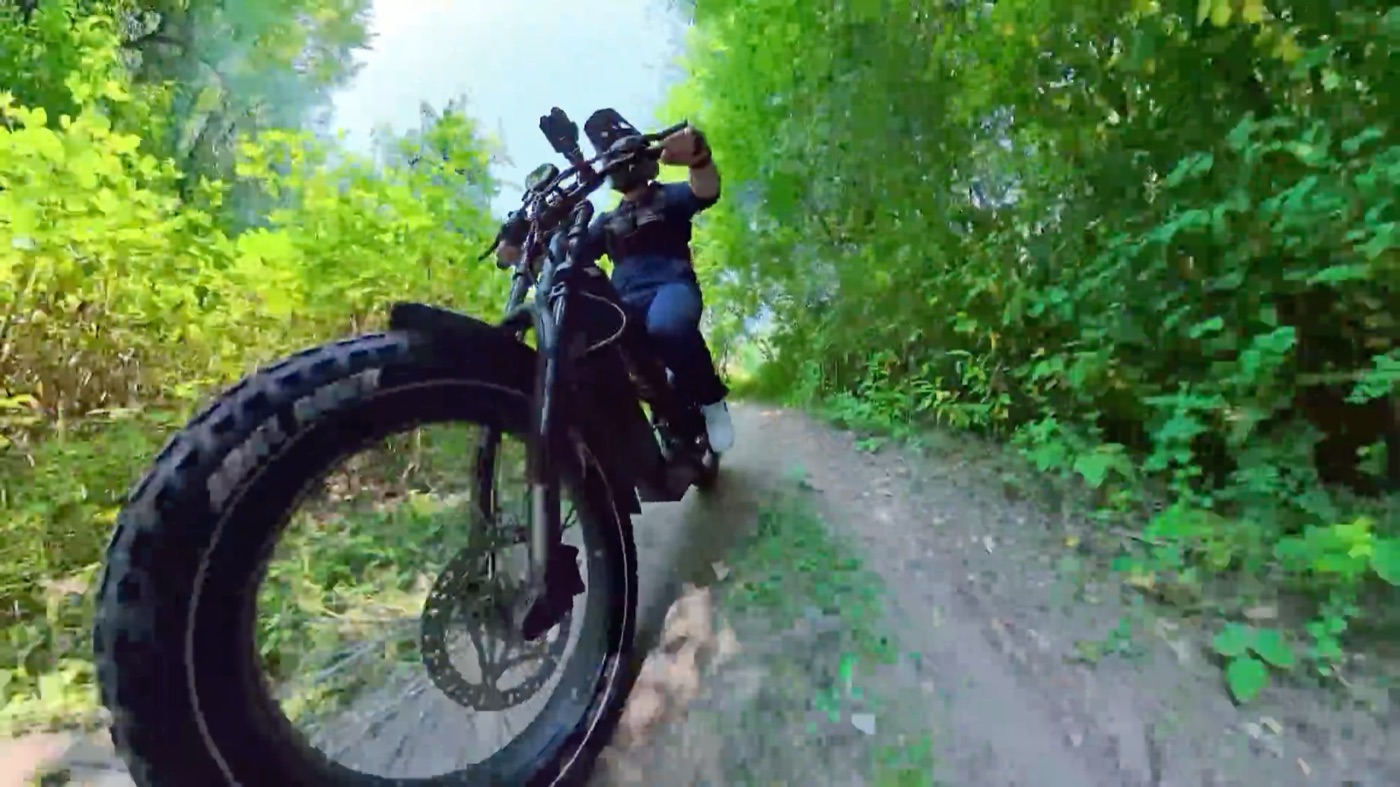
My long grueling test hill gives underpowered bikes a headache. I didn't even go to throttle mode 3 — that lifts the front wheel — and it still pulled 37 mph up the hill. They weren't joking about the power.
Same lamp pole, same driveway I use on every bike. My benchmark for a fast bike is 20 mph in that gap. In its lowest mode the Mudd did 21. Sport got 25, BOOST got 30, and throttle mode 3 hit 35 — and lifted the front wheel.
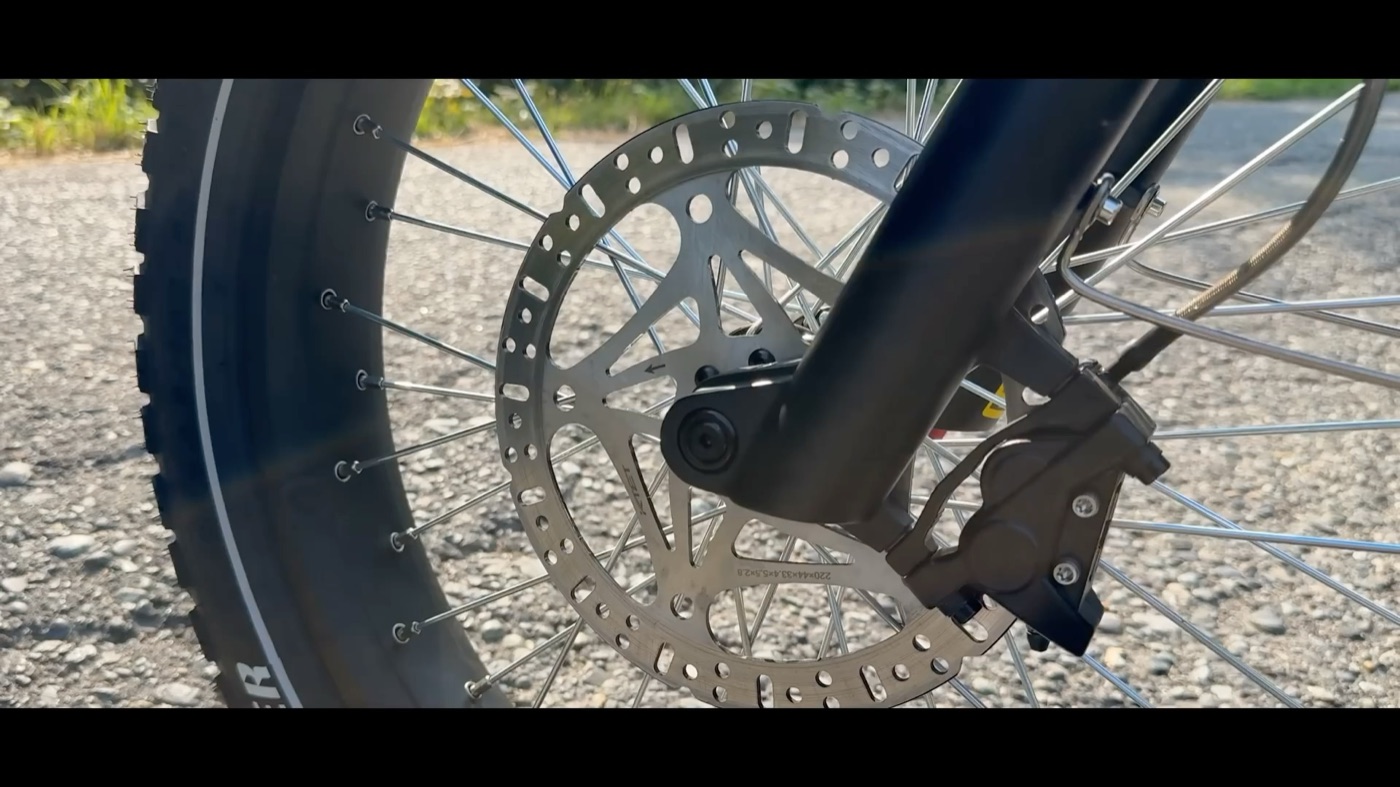
My standard 20-foot brake test. I could smell burning rubber and the rear skidded a fair way, but it stopped with room for an entire other bike to spare — and that's on the prototype's mismatched rotors. Yours will be better.
At 23 miles I was still at roughly 50% — and that's riding the way I ride in these tests. On the 39Ah production pack it should be better. Will everyone see the claimed 80–120? No. Range depends on weight, speed, terrain, wind and how much you pedal.
The test that surprised me most. In throttle mode 3, BOOST, PAS 6 — the most power this thing can make — I could feather along at 4 mph. On a $1,000 bike the throttle is on/off. This one is detailed, responsive, and has zero lag.
Plan Your Ride
Your Range, Not Mine
My 40+ miles came from riding it hard. Set the speed, terrain and your own weight below and you will get the window to plan a trip inside. The Mudd takes a second pack, so the extra battery control shows what that buys you.
From the Review
Out on the Road
In The Details
Up Close
Every Angle
Studio Gallery
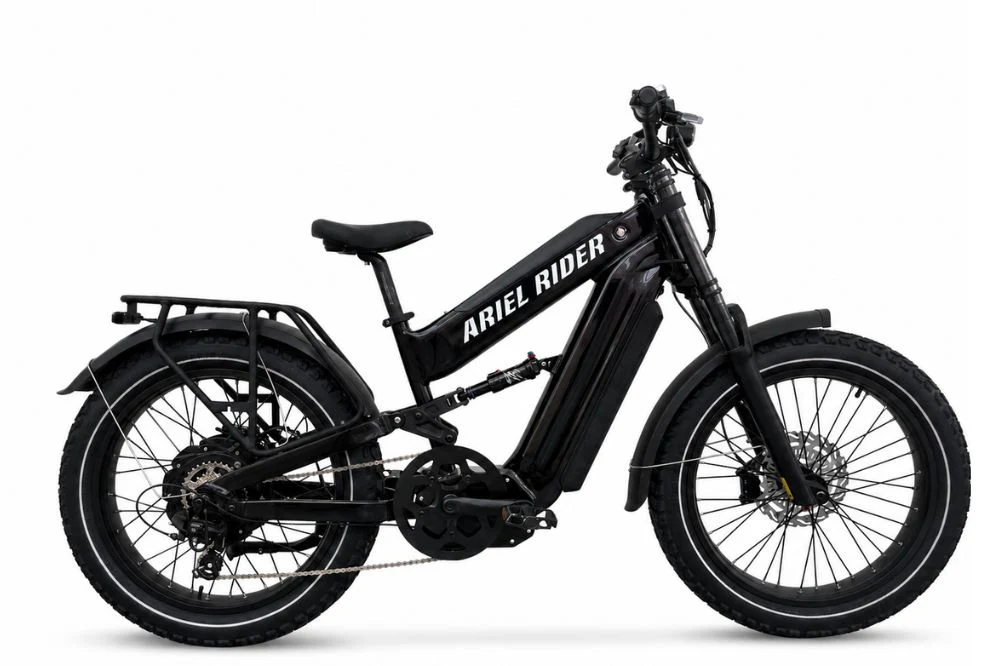
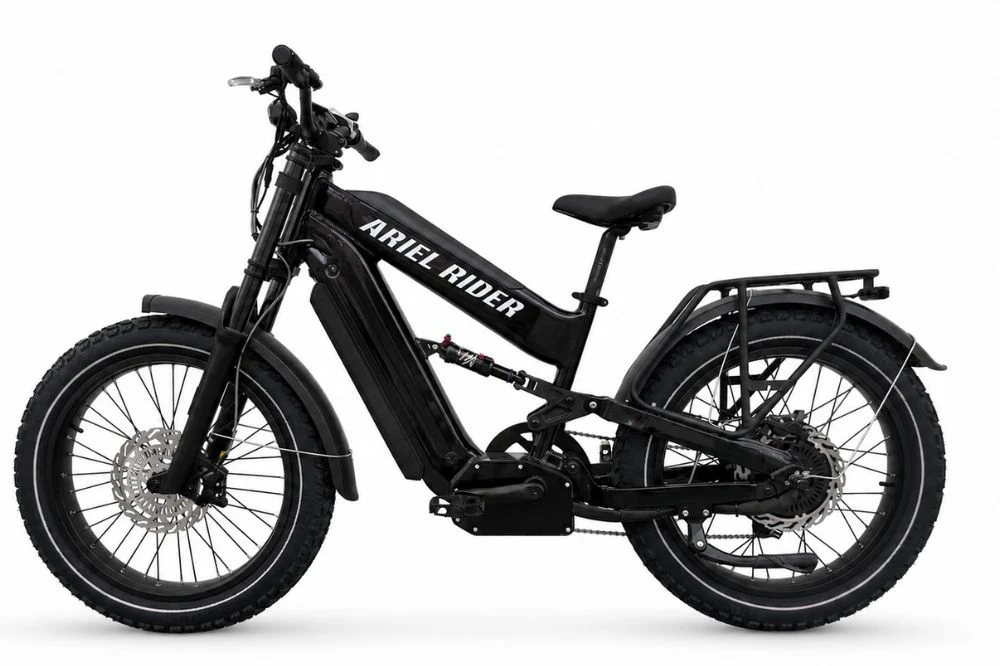
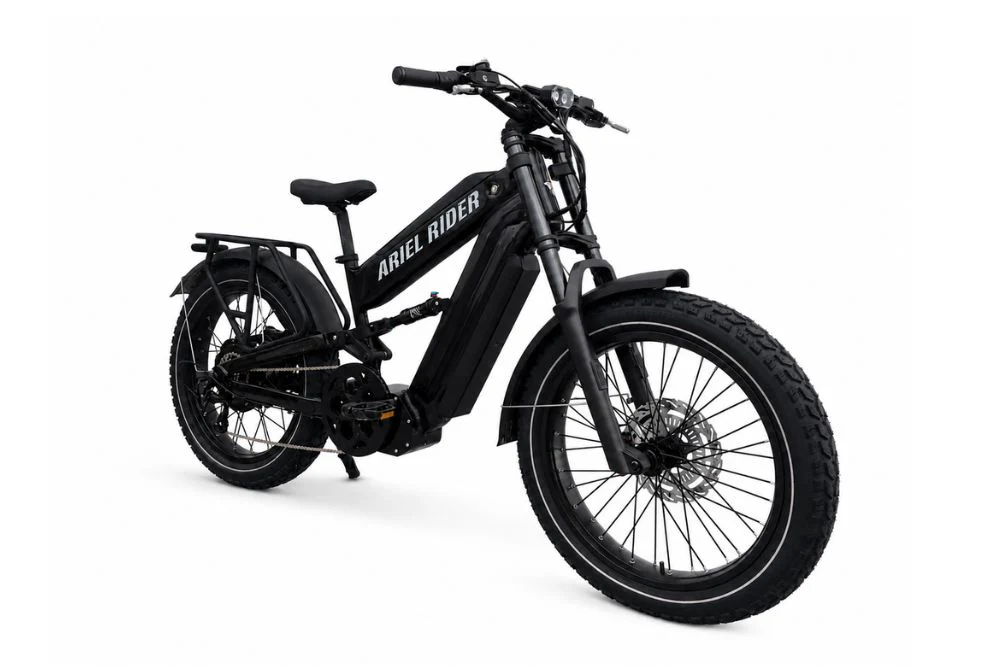
The Engineering
Built On Better Technology
The Motor Is A Beast
Oil-cooled · metal gears · 8,000W peak
Five Times Better At Shedding Heat
It's an oil-cooled, metal-geared rear hub — about five times better at pulling its own temperature down than plain air cooling. The best of all worlds in a motor: strength and longevity without being obnoxious.
330 Nm — And You Feel Every One
Rated 3,500W, peaks at a ridiculous 8,000W. They say 330 Nm and I definitely believe 330 Nm. This thing pulls and pulls and pulls. To run 8,000 watts through a geared hub is absolutely insane.
A 95-Amp Controller
Regular e-bikes run 20–25A. Even most high-performance bikes sit at 40–50A. This is a 72V 95A 18-MOSFET sine-wave controller, and it's thermally monitored — which matters a lot when you're pushing this much through a hub.
Suspension Is The Highlight
Triple-crown fork · linkage-driven air shock
Like Riding A Cloud
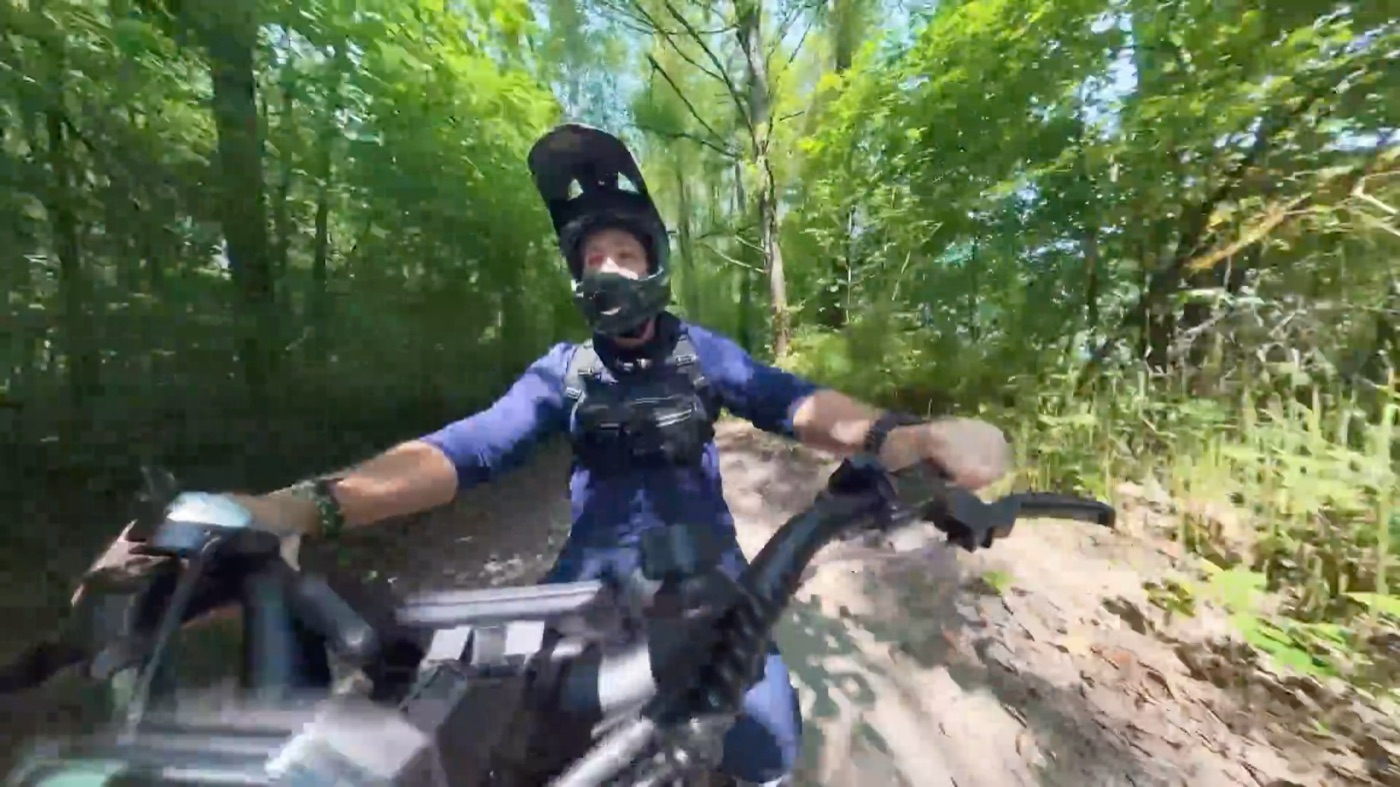
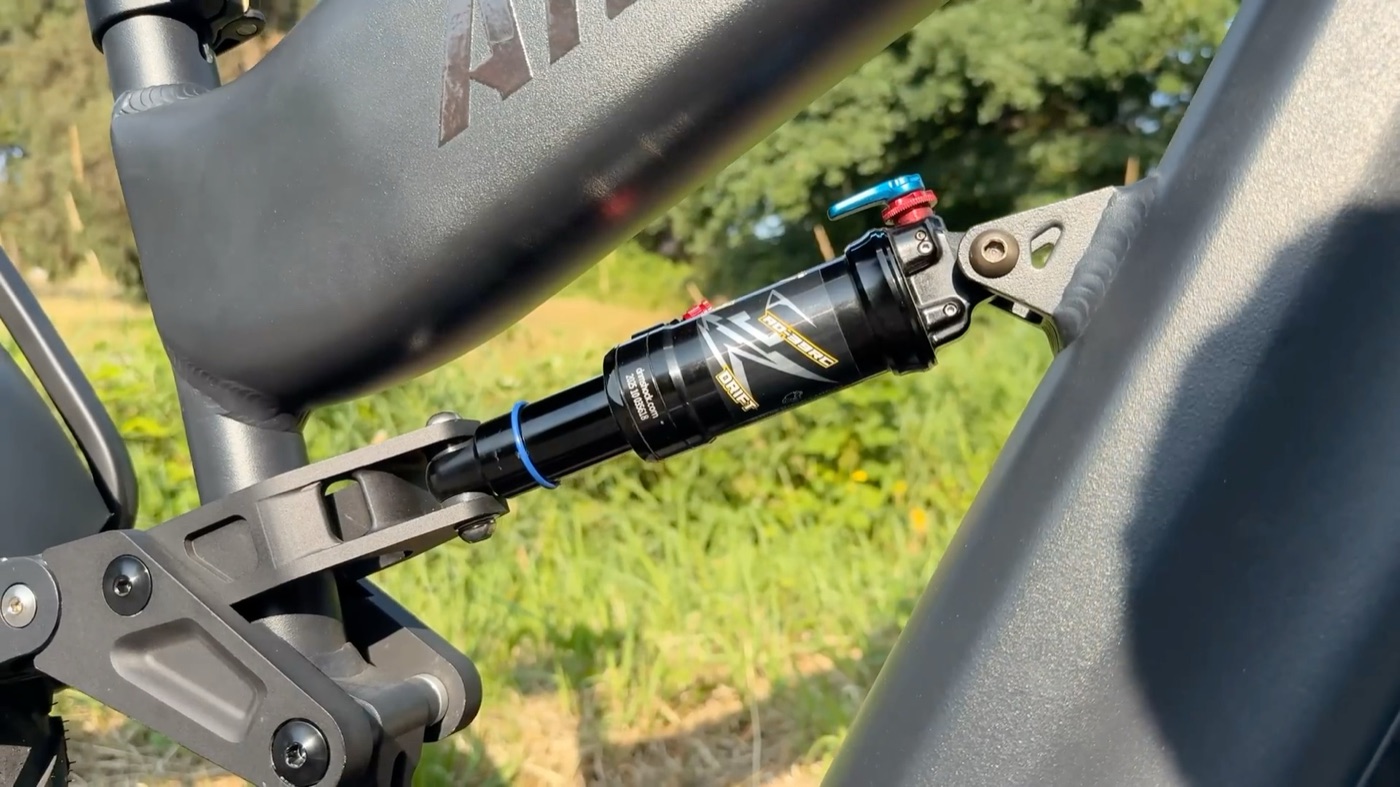
I rode straight into potholes that should have rattled my teeth out. Nothing. Not a single rattle. It just feels controlled and smooth and completely bomb-proof — and the ability to slow the rebound down is a game changer.
Pump It To Your Weight
The rear is a linkage-driven DNM air shock, so you dial the support to your body. Want cushy, let air out. Want stiff and supportive, put air in. It genuinely feels like motorcycle suspension.
9.5/10 On The Front Fork
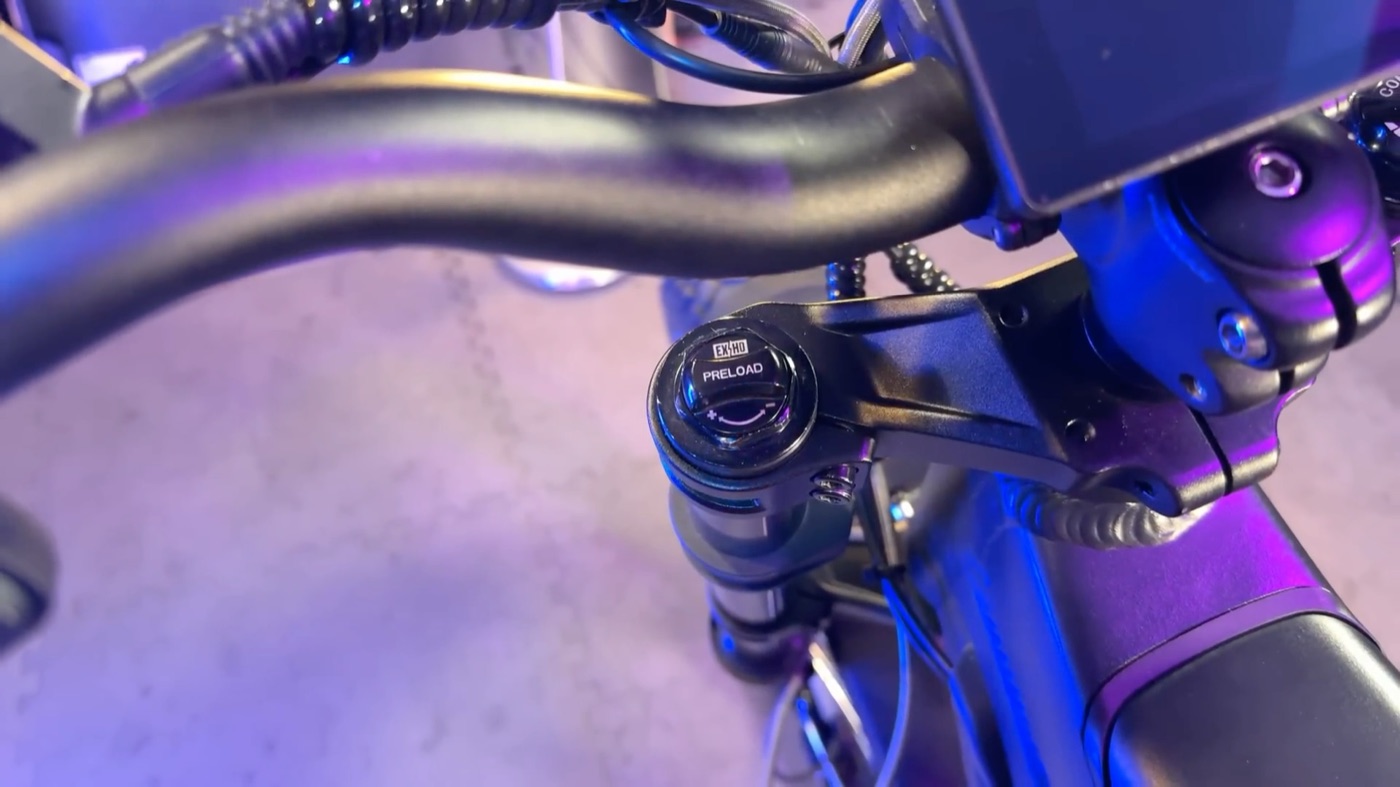
Triple-crown, 100mm, huge stanchions, thru-axle. Preload on the left, compression with lockout on the right, rebound at the bottom. Stiff laterally but responsive to small bumps. The only thing it's missing is being an air fork — and I don't think you need it.
The Battery Might Beat The Motor
72V 39Ah · 2,808Wh · two chargers
Why It's The More Impressive Number
An 8,000W motor is exciting, sure — but you can only use that performance for as long as the battery supports it. 2,808 watt-hours is what turns this from a toy you take on a joyride into something you can actually use as transportation.
Both Packs, At The Same Time
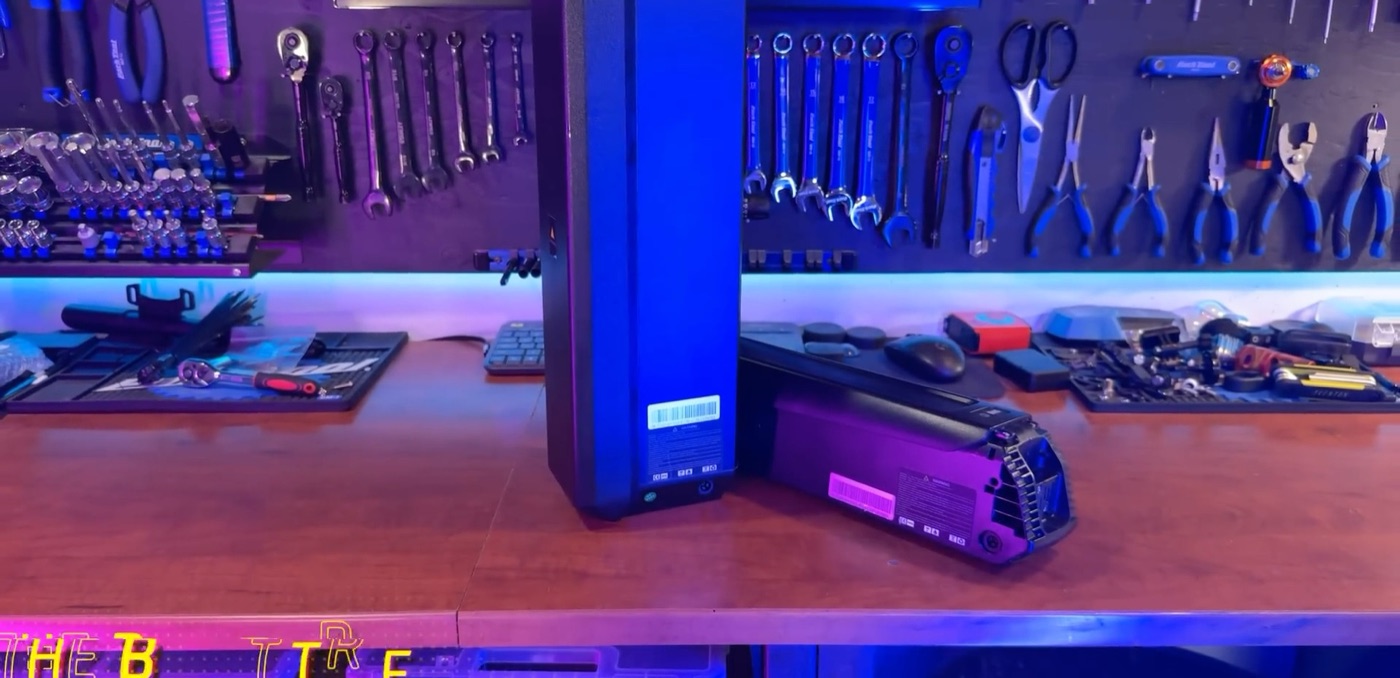
You get two UL-certified 72V 5A chargers. Charge both batteries simultaneously and even the big pack goes from flat to full in under six hours.
Torque Or Cadence — One Button
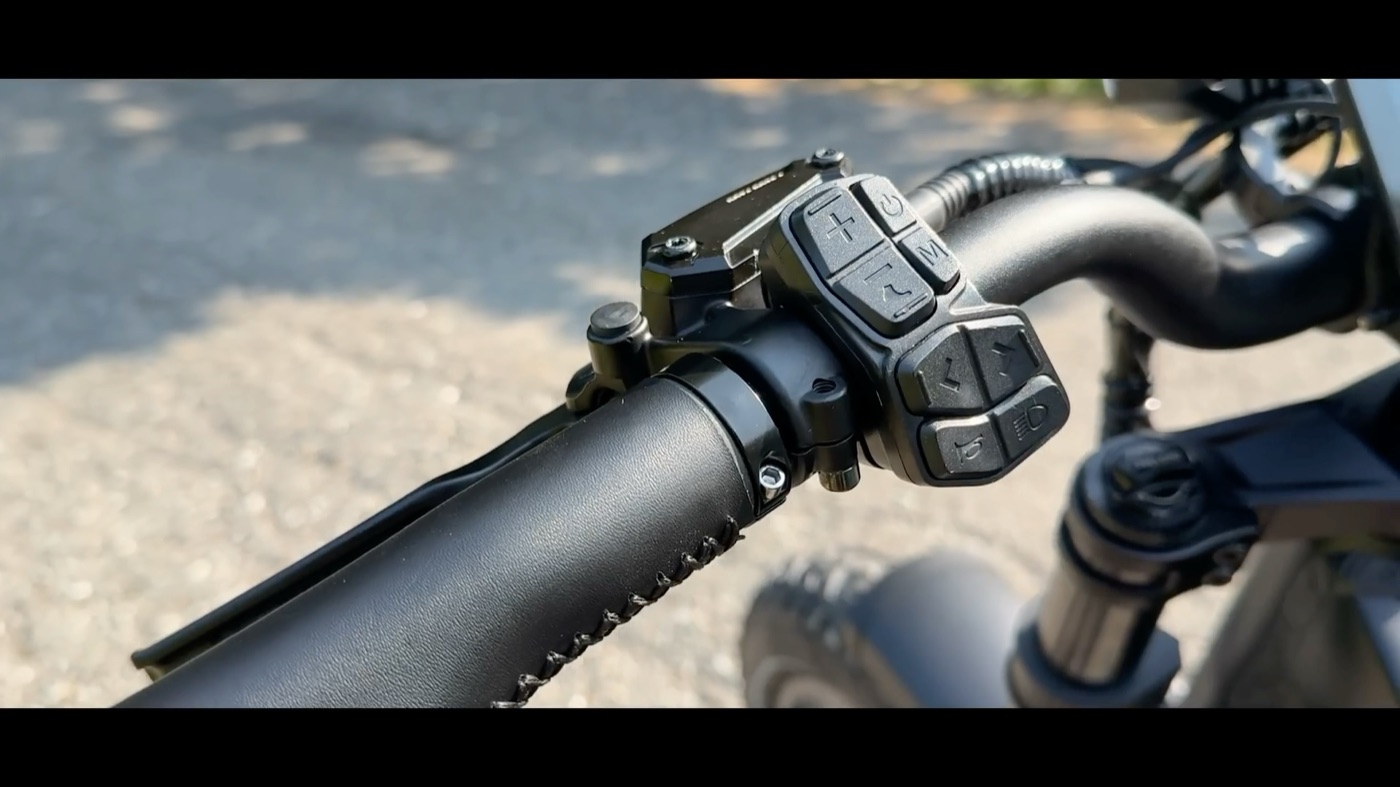
It has both sensors and you swap on the fly by holding a button. Most bikes bury that in a menu, if they offer it at all. Torque feels natural and gradual; cadence lets you ghost-pedal at a set power. I prefer torque on a bike like this.
The Cockpit
The Electronics Are Perfect
Refined, readable, written in plain English
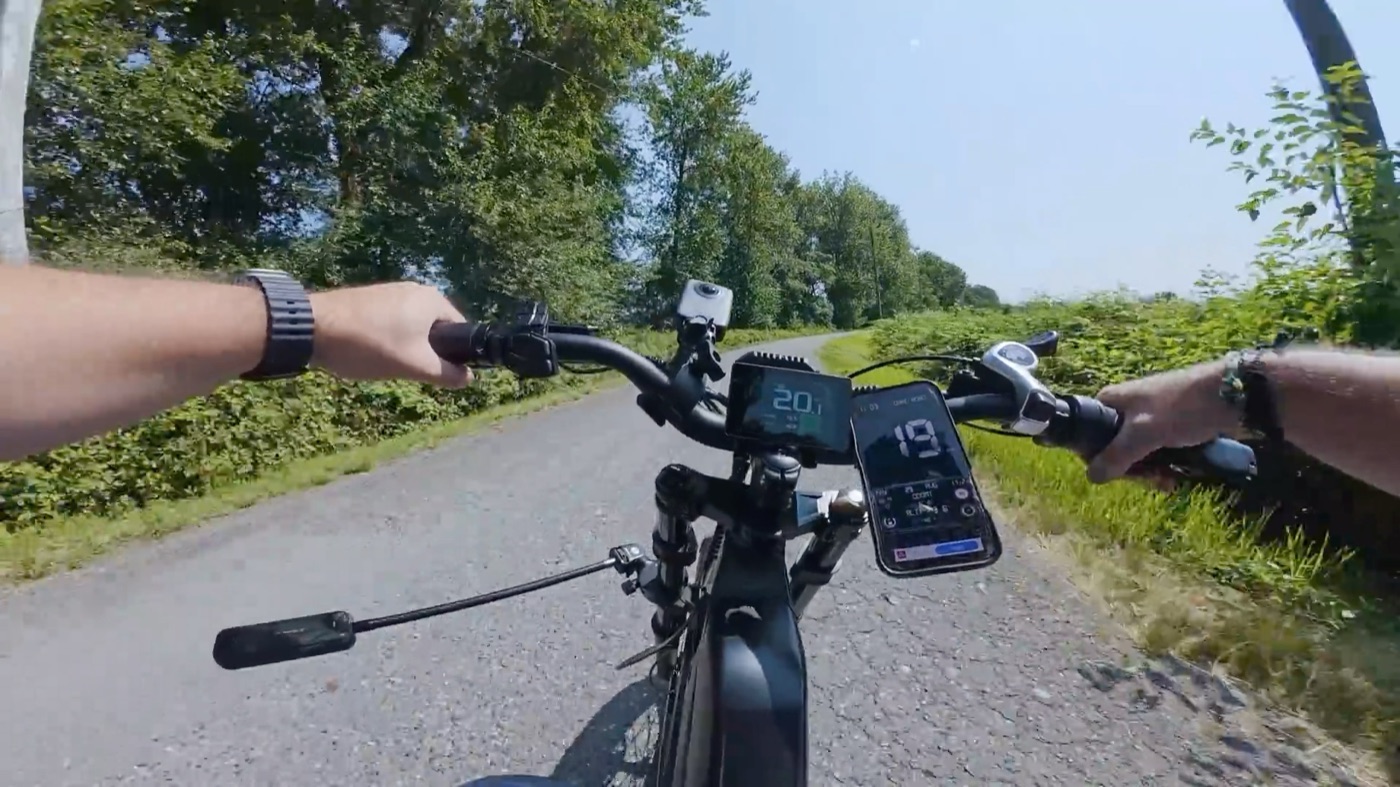
The screen is awesome. I had the sun directly behind me and could still see it clear as day — deep black background, big bright white numbers, and it's colour. You can see both batteries draining side by side and set them to read in percentage or voltage.
What I really love is the menu. It's written in plain English. You get into general settings and play with anything on the bike — you're not deciphering a code or hunting for the manual to find out what sub-menu 2.4 does. Three modes (ECO / SPORT / BOOST), six assist levels in each, and three throttle modes on top.
The rear turn signals put an indicator right on the screen and cancel themselves, so you don't ride around blinking for five minutes. There's a proper headlight with high, low and DRLs, an integrated brake light, and a horn. The only thing missing is front turn signals — and honestly, it's the rear ones that matter.
Find Your Fit
Size & Fittings
Mudd 72V 24″ Fat · Full-Sus
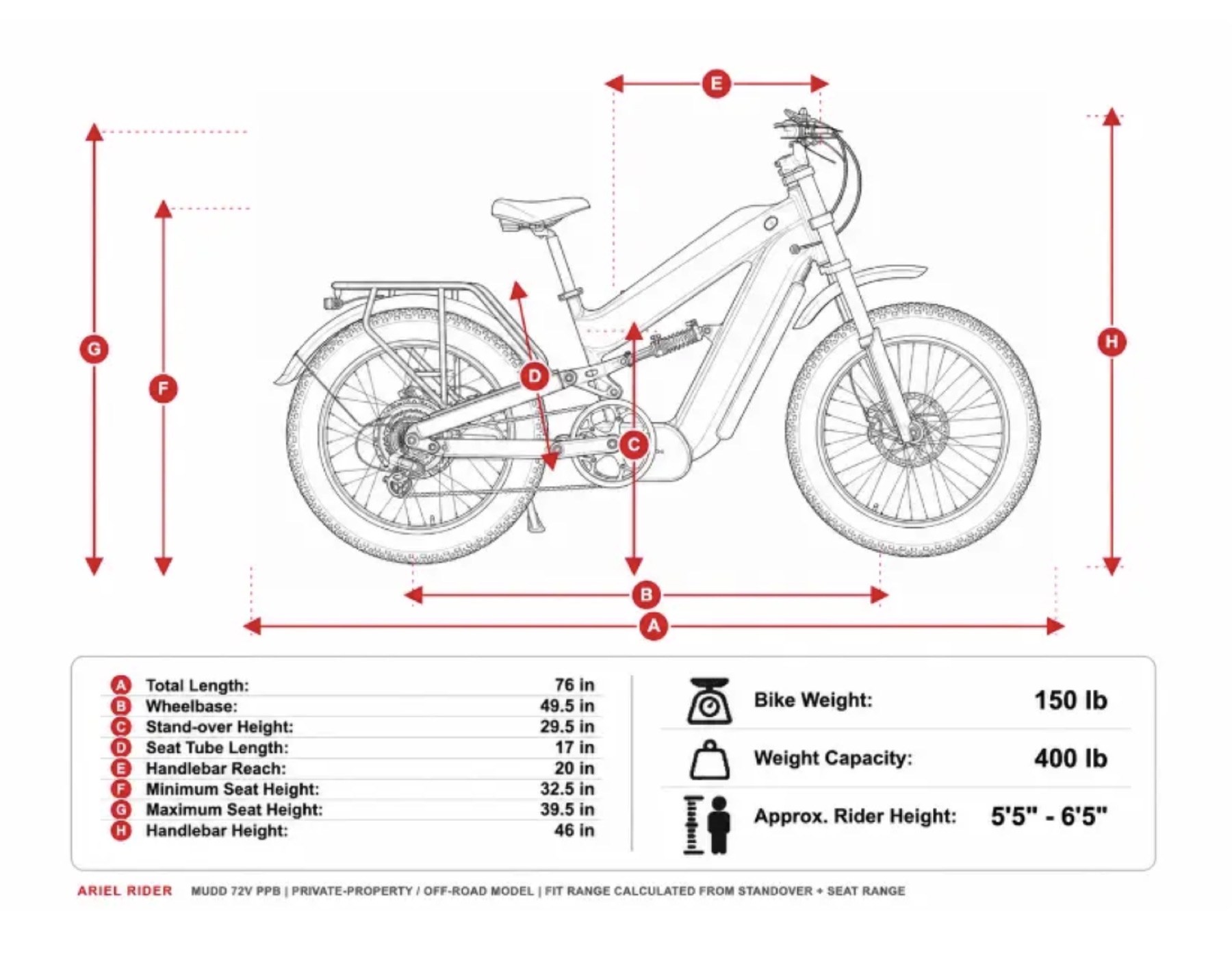
Will It Fit You?
- Seat height32.5" – 39.5"
- Standover29.5"
- Wheelbase49.5"
- Overall length76"
- Weight150 lbs
- Payload400 lbs
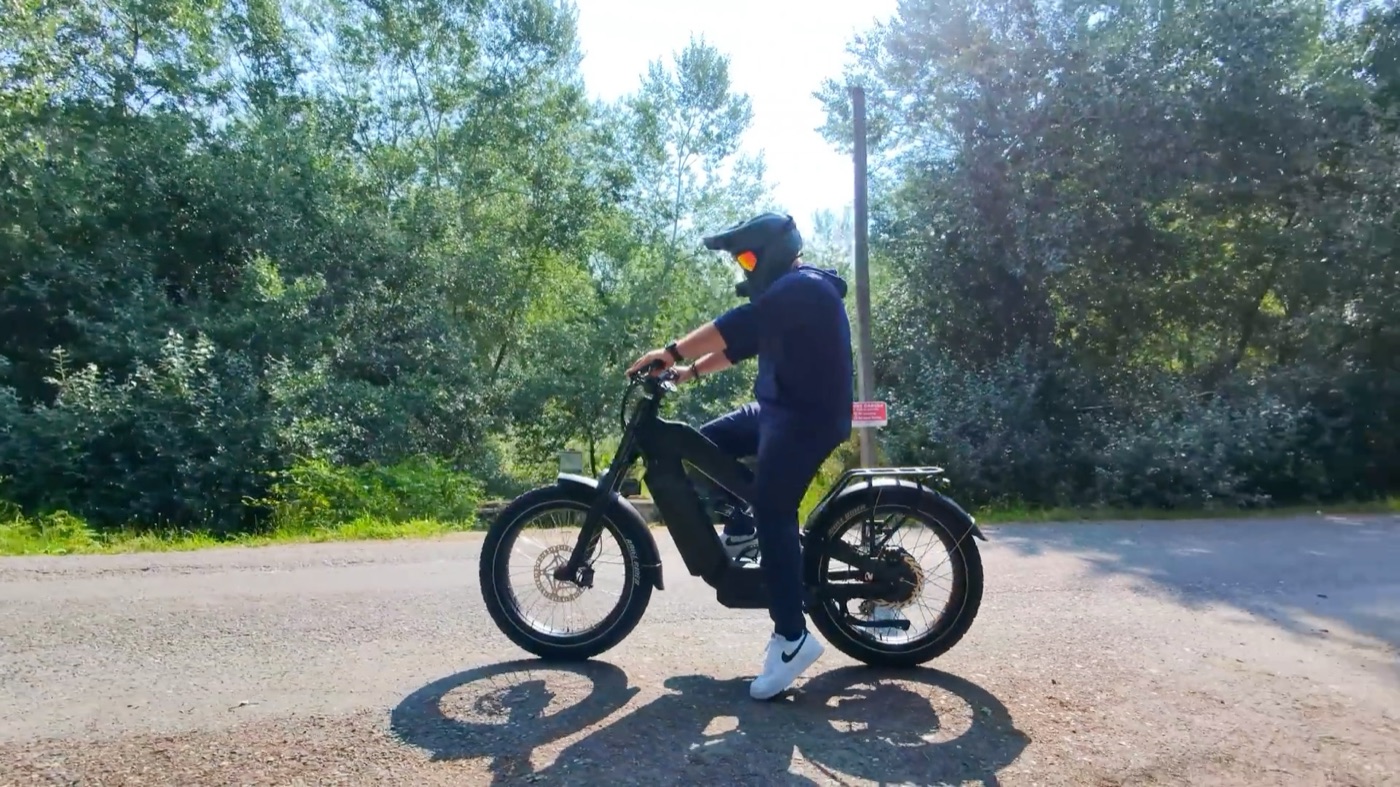
I'm 5'9" and this is the Goldilocks size e-bike for me — with the seat slammed I can flat-foot it on both sides easily, and it still feels roomy. My knees aren't in my throat. Raise the seat a touch and it's genuinely comfortable to pedal. The seat post is dead straight, so if you've got long legs you can drop a massive post in there; with everything you can adjust, this should suit riders from about 5'5" to 6'5". That adjustability is the single biggest difference between this and a moped-style bike. Just know: it's 150 lbs with both batteries in, so it's not the bike you want if you have to haul it up stairs — and you'll need a beefy rack to carry it.
The Numbers
Full Specifications
Source: arielrider.com →⚡ E-System
🏍️ Performance
🔧 Suspension & Brakes
✨ Features & Options
The Bike Cave Verdict
Ben's Take
“This is for someone who wants electric motorcycle performance, but still wants the design, simplicity, and accessibility of an electric bicycle.”
“At the beginning of the video, I asked three questions. First, can the Ariel Rider Mud actually get close to 65 miles an hour? And today we reached just a little bit under that. Considering I'm a 200 pound rider, that's extremely impressive.”
“Second, can the frame, suspension, and brakes actually handle this much performance? The answer is definitely. This bike is purpose built to do what it's supposed to. Go really fast and stay really safe.”
“Is it a bicycle? Is it a motorcycle? I still don't really know, but I do know one thing. It's an absolute blast to ride.”
👍 What I loved
- 58 mph on the GPS — and totally planted when it got there
- The suspension. Potholes, gravel, trails — it's just air
- 8,000W oil-cooled hub with 330 Nm you genuinely feel
- 2,808Wh dual battery — I got 40+ miles riding it hard
- A throttle detailed enough to crawl at 4 mph in max power
- Welds and build quality that feel like a tank
- Colour screen you can read in direct sun, menus in plain English
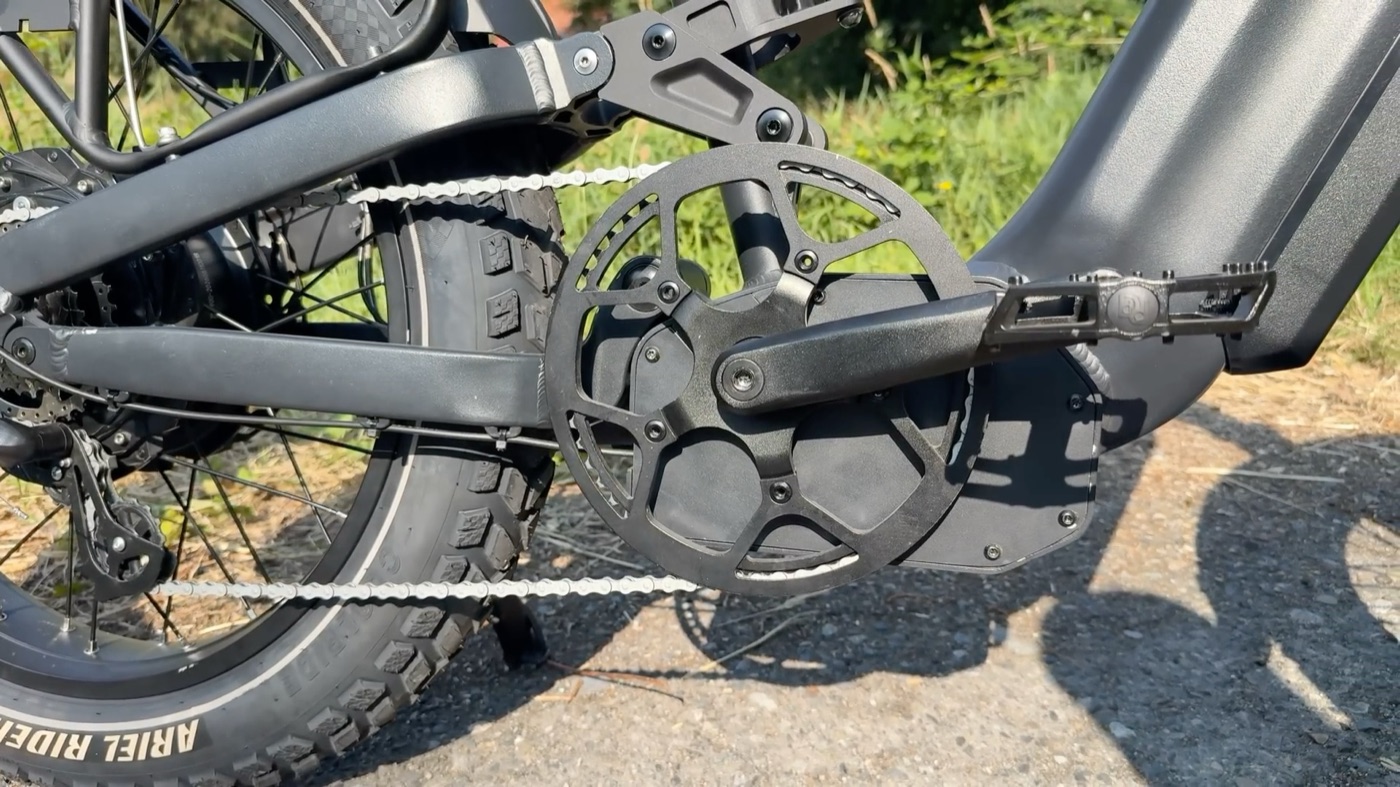
- Way better to pedal than I expected — 56T ring, real 7-speed
👎 What to know
- 150 lbs — not the bike if you have to carry it upstairs
- You'll need a seriously beefy rack to transport it
- The motor makes some noise — quieter than a Wired, louder than an Alpha
- No front turn signals (the rear ones matter more, but still)
- Ships uncapped, so pacing it is entirely on you
- Boost mode is always there, staring at you
The Million-Dollar Question
Who Is The Mudd For?
You want electric motorcycle performance but still want the design, simplicity and accessibility of an electric bicycle. You want enough power to climb steep hills, accelerate hard and keep up with traffic when it's safe to do so.
You're a larger rider who appreciates a 400 lb payload and a spacious frame — or a smaller rider like me who appreciates the low standover. You want a huge battery and no range anxiety every time you twist the throttle.
You're a first-time e-bike rider who isn't comfortable on two wheels yet. You need something light enough to carry upstairs. Or — let's be honest — you have zero self-control, because boost mode is always waiting.
Frequently asked questions
How fast is the Ariel Rider Mudd 72V?
58 mph on the GPS with a 200 lb rider. Ariel Rider claims 65, so the measured number lands just under the marketing figure — which is unusually close for a bike making these claims. Ben's read: extremely impressive, and more than enough that the rest of the bike has to earn its keep.
Can you ride the Mudd on the road?
No. Ariel Rider sells it as a PPB, which means it ships with no speed cap at all. At 3,500W rated, 8,000W peak and 58 mph it's far outside the US e-bike class system, no matter what it looks like. Ride it where that's allowed, and wear real gear.
What range does it actually get?
Ben got 40-plus miles riding it hard, against a claimed 80 to 120. That's the honest trade: the 72V 39Ah dual Samsung pack holds 2,808Wh, which is a huge amount of energy, and riding at 50 mph spends it fast. Ride it gently and the claimed numbers become plausible; ride it the way you'll want to and plan around 40.
How does it climb and accelerate?
Both were measured in the review. In BOOST at throttle level 2 it held 37 mph going uphill. On the flat in BOOST at throttle 3 it reached 35 mph in 60 to 70 feet. That's 330 Nm from an oil-cooled geared hub, and it's the reason Ben calls the power the thing that gets your attention first.
Can it stop from those speeds?
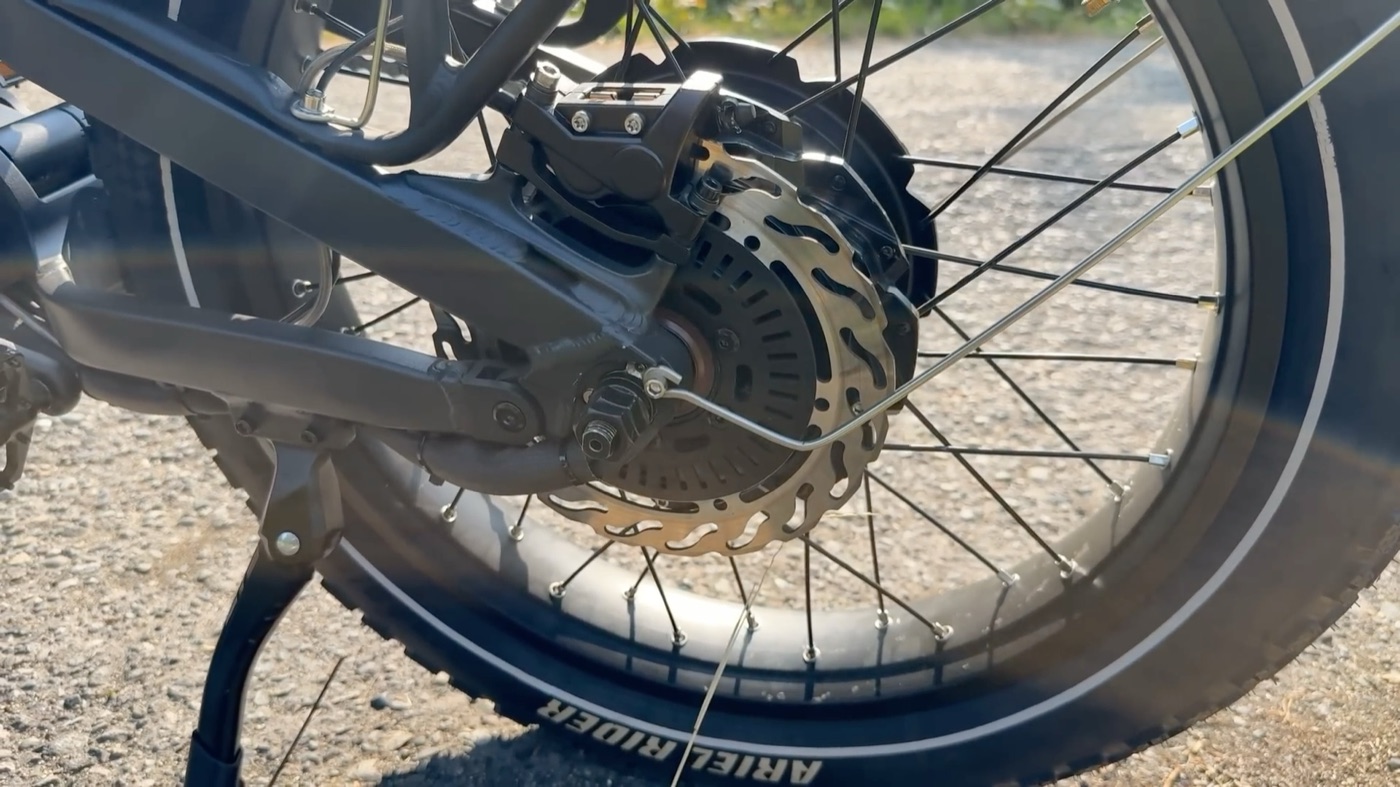
That was Ben's second big question and the answer was yes. Four-piston hydraulic brakes on 220mm rotors front and rear, with motor cutoffs, plus 24-inch fat tires that make the bike feel planted rather than nervous at speed. The suspension — a triple-crown fork and a four-link rear with a DNM air shock — is what keeps it composed while you use them.
How heavy is it, and who does it fit?
150 lbs, with a 400 lb payload and a rack rated for 50-plus lbs. The seat adjusts from 32.5 to 39.5 inches on a straight post, and the low standover is one of the reasons Ben — a smaller rider — got on with it. What it won't do is go up your stairs, so plan storage and transport before you buy.